
You don't need to win every trade.

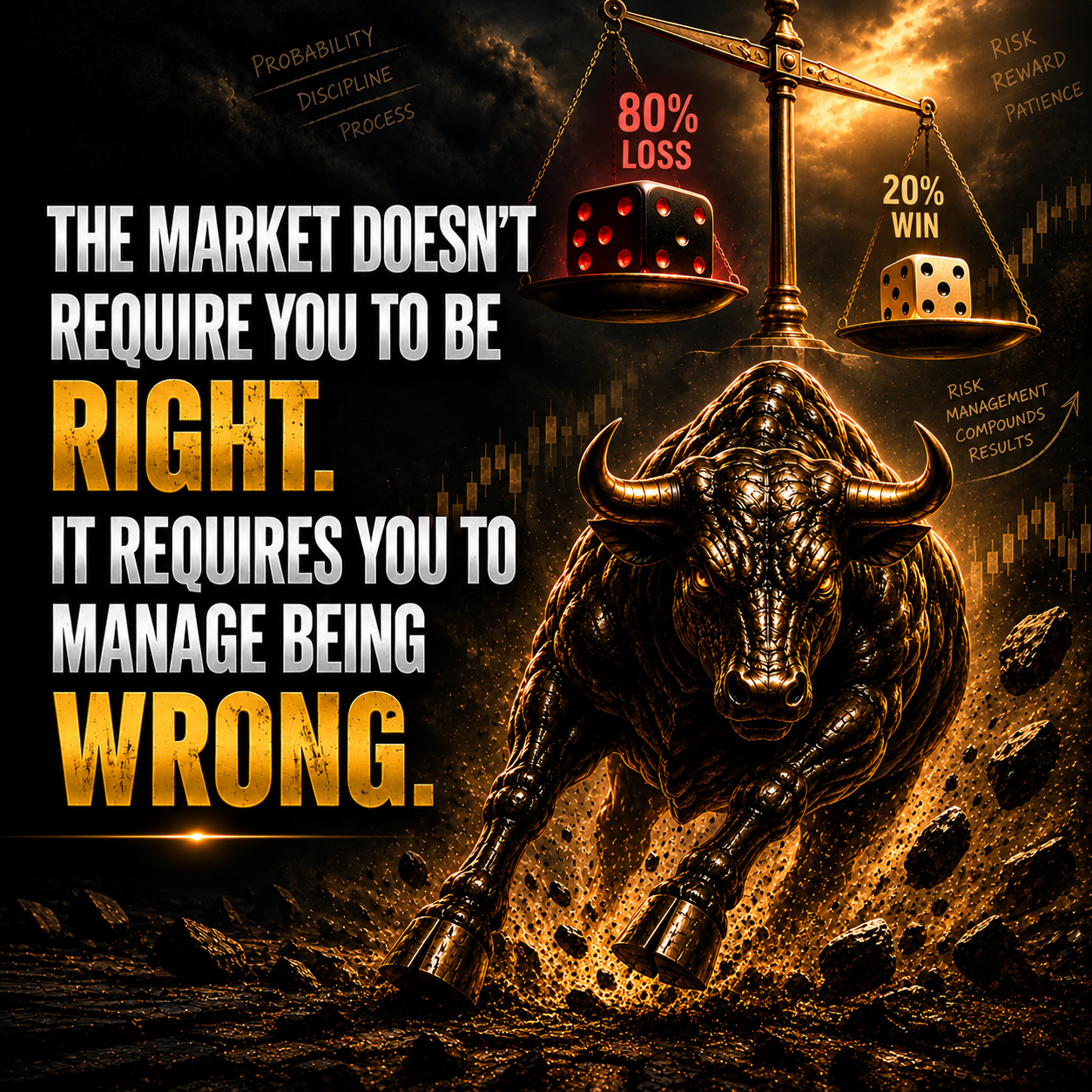


The real edge is deciding how much you are willing to lose when you're wrong, before you enter.
A strong risk-to-reward framework changes the psychology of trading:
→ Losses become part of the process, not a personal failure.
→ Win rate becomes less important than payoff asymmetry.
→ One good trade can compensate for several small losses.
→ Most importantly, you stop forcing trades just to be right.
Risk ₹1 to pursue ₹5.
Because the objective isn't to predict every move.
It's to stay in the game long enough for probability to work in your favour.
Risk first. Reward second. Ego last.