
The Giant is Going Public! A Beginner’s Guide to the NSE IPO

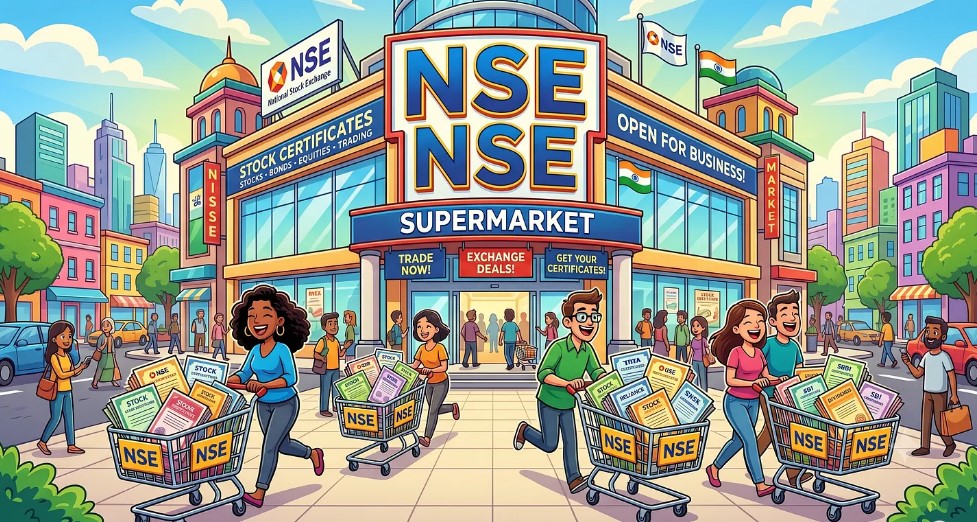
World’s Largest Stock Exchange by Contracts Is Finally Ready to Go Public
Welcome, new investors! If you’ve been following the stock market lately, you might have heard a lot of buzz about the NSE IPO. But what exactly is the NSE? Why is the exchange itself going public? And more importantly, is it a good opportunity?
Let’s break this down simply, without the confusing Wall Street jargon

What is the NSE?
Think of the National Stock Exchange (NSE) as a massive supermarket. But instead of buying groceries, people buy and sell shares of companies (like Tata, Reliance, or HDFC).
Set up in 1992, the NSE was created to modernize stock trading in India. Today, it is an absolute giant:
- It has over 2,200 listed companies with a total market value of around $5 trillion.
- It runs the famous stock market indicators you hear about on the news, like the Nifty 50 and Nifty 500.
Now, for only the second time since a previous attempt in 2016, the NSE is planning its IPO (Initial Public Offering). This means the “supermarket” itself is selling its own shares to the public!

How Does the NSE Make Money?
The NSE operates like a toll plaza on a busy highway. Every time someone buys or sells a stock, the NSE charges a small fee. In fact, transaction charges make up about 80% of its direct revenues.
The biggest money-maker for the NSE right now is “options trading”—a type of fast-paced trading that became wildly popular during the COVID-19 pandemic.

Is NSE a Big Deal? (The Pros)
1. Practically a Monopoly
When you buy shares in India, there is a massive chance you are doing it through the NSE. They hold a whopping 95% market share in cash equity (regular stock buying/selling) and 75% in equity derivatives (advanced trading contracts).

2. Global Champion
The NSE isn’t just big in India; it is the world’s largest derivatives exchange by the number of contracts traded. In fact, India trades about 90% of the world’s global stock index option contracts, largely thanks to the NSE.
3. Low Costs = High Profits
The NSE makes a lot of money without spending too much. Even though the NSE handles trading volumes that are 6 times larger than those of US stock exchanges, its operating costs are incredibly low. Because of this, it has “best-in-class” profitability. From 2020 to 2024, the NSE saw its revenues quadruple (grow by 4x)!
What Are the Risks? (The Cons)
No investment is completely perfect. Before you invest, you need to know the risks:
1. Heavy Reliance on Trading:
About 79% of the NSE’s revenue comes directly from trading volumes. If market sentiment drops and people stop trading as much, the NSE’s profits will shrink

2. Strict Regulators (SEBI):
The Indian stock market regulator, SEBI, thinks there is too much speculative trading happening. They have been introducing new rules to slow it down, which has slightly hurt the NSE’s volume growth.
3. Past Lawsuits:
The NSE has faced regulatory actions in the past. Ahead of this IPO, they have paid around ₹4,000 crores in fines to settle various legal and governance issues.

The Important IPO Numbers
If you are thinking about buying shares when the IPO goes live, here are the estimated numbers you need to know:
- Expected Price: Between ₹1,900 and ₹2,200 per share.
- Company Value: At those prices, the whole NSE is valued at around ₹5 lakh crores (or $53 billion).
- Who owns it right now? Interestingly, the NSE has no central “promoter” or single owner. It is currently owned by over 20,000 shareholders, with the Life Insurance Corporation of India (LIC) as the largest shareholder at 10.7%
💡 Final Thoughts
The NSE IPO is being called a “watershed moment” for the Indian financial market. As more and more Indians shift their savings from gold and real estate to the stock market, the NSE is well positioned to benefit. While the valuation numbers look reasonable compared to other global stock exchanges, the business relies heavily on the overall mood of the stock market