
The RBI Redrew the Rules and Bajaj Finance Fell 6 Percent. Read the Draft, Not the Panic.

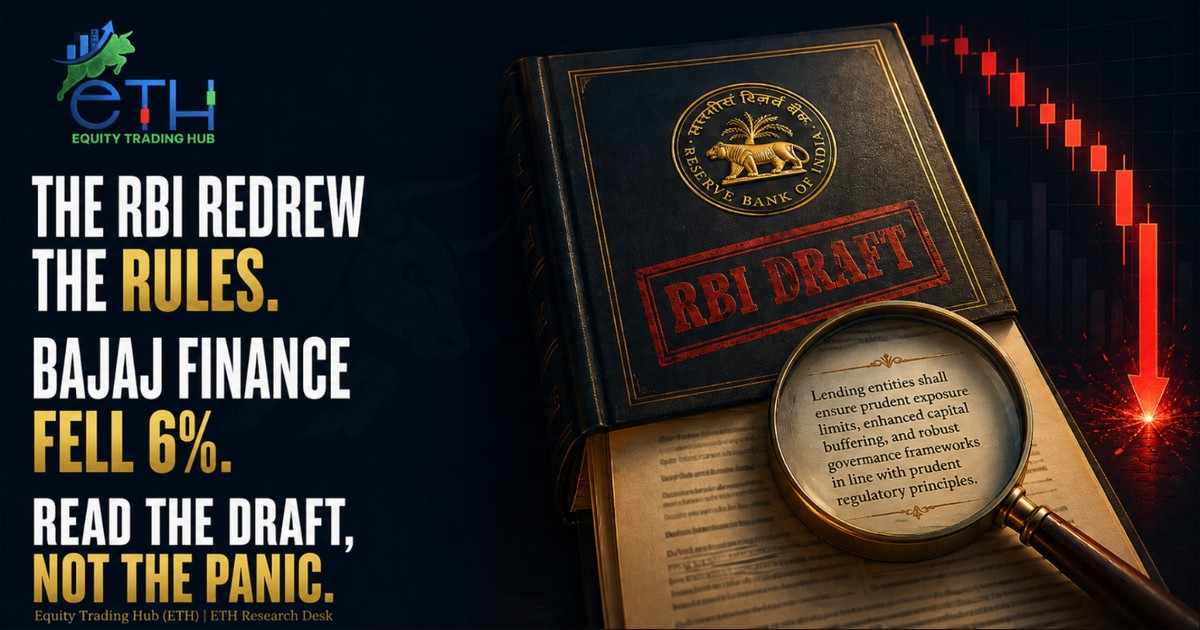
The market's most efficient machine is the one that sells first and reads later. It ran at full speed today. The RBI released draft proposals to tighten norms for certain revolving credit products offered by non-bank lenders, and within hours Bajaj Finance was down nearly 6 percent, Bajaj Finserv about 4, and the Bank Nifty was dragging the whole index with it. The VIX jumped 12.5 percent. On a day the Nifty itself fell barely a third of a percent.
Before joining either the panic or the dip-buying stampede, do the one thing most sellers today did not: read what actually happened.
WHAT THE RBI ACTUALLY PUT OUT
A draft. Not a circular in force, not a final regulation, a proposal open for consultation. Draft norms exist precisely so that the industry can respond, numbers can be negotiated, and timelines can stretch. The history of Indian financial regulation is full of drafts that arrived looking like sledgehammers and finished as adjustable spanners. That does not mean this one will soften. It means today's price move is the market pricing the harshest possible reading of a document that is, by definition, not final.
WHY THE PUNISHMENT LANDED ON BAJAJ
When a rule targets a product category, the market sells whoever is best at that category. Revolving and instalment-style consumer credit is the engine room of Bajaj Finance's model, the fee and cross-sell machine built on top of it is part of why the stock has commanded one of the richest multiples in Indian lending. Tighter norms threaten the growth rate of exactly the book that justifies the premium. A 6 percent single-day derating is the market shaving that premium, not predicting bankruptcy. Understanding which of those two things happened today is the entire difference between panic and analysis.
THE FRAMEWORK FOR REGULATORY SHOCKS
Rule one: separate the draft from the direction. Details of a draft change; the direction of regulation rarely reverses. The RBI has been telegraphing discomfort with the pace of unsecured and revolving consumer credit for two years. Today is a continuation, not a surprise. Business models exposed to that direction deserved a discount before this morning.
Rule two: quantify before you extrapolate. The question that matters is what share of the affected book falls under the proposed norms and what the growth and margin hit would be if the draft passed unchanged. That number, when managements publish it in the coming days, will either justify today's fall or expose it as overdone. Nobody selling at 11 this morning had that number. Neither do you yet, and honesty about that is a position too.
Rule three: watch the second day, not the first. Day one of a regulatory shock is positioning. Day two and three tell you whether long-term holders are actually leaving. A stabilisation above today's low on declining volume is the classic signature of a shock absorbed. A weak bounce on thin volume that fails within a session says the derating has further to run.
Rule four: never average a falling lender on reflex. Financials are levered businesses where regulation writes the terms of the business itself. Buy the dip in a lender only after you can articulate, in one written sentence, why the rule change does not break the compounding thesis. If you cannot write that sentence yet, wait for the final norms. Missing the first 5 percent of a recovery is cheaper than catching the middle of a derating.
WHAT WE ARE DOING AT THE DESK
Reading the draft, building the exposure math, and waiting for management commentary before touching anything. The RBI consultation window is the market's gift of time. Use it the way professionals do: to replace this morning's reflex with next week's arithmetic.
You own the stocks. We write the reasons. Every single time.
DISCLAIMER: This article is for education and information only. It is not investment advice, not a recommendation, and not a solicitation to buy or sell any security. Regulatory proposals discussed are drafts as reported on 7 August 2026 and may change; verify from official RBI publications. Prateek Goel is a SEBI Registered Research Analyst (INH000025902). Investments in the securities market are subject to market risks. Read all related documents carefully before investing. Registration granted by SEBI and certification from NISM in no way guarantee the performance of the intermediary or provide any assurance of returns to investors.