
The Nifty Barely Moved Today. The Fear Index Jumped 12.5 Percent. Someone Is Buying Insurance.

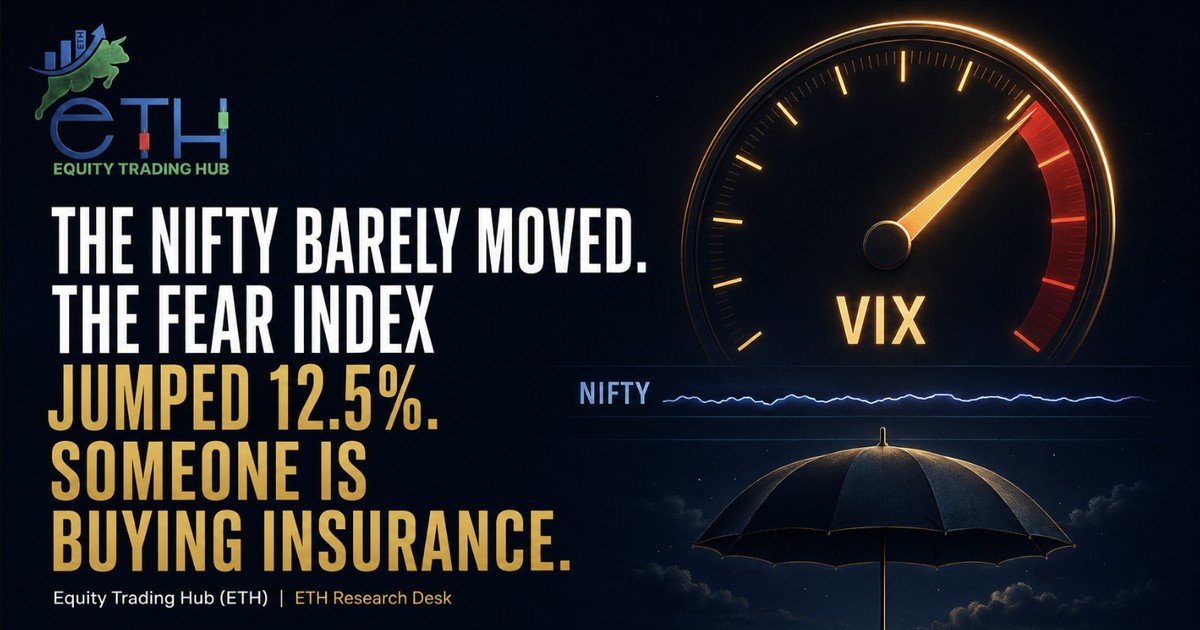
Two numbers from today's session do not belong together. The Nifty slipped about a third of a percent. India VIX, the index that measures how much volatility option traders expect over the next month, exploded 12.5 percent. On most days those two move like dance partners: index falls hard, fear rises hard. Today the index barely stumbled and fear vaulted the counter. That gap is the day's real story, and it is worth understanding even if you have never traded an option.
WHAT THE VIX ACTUALLY IS
India VIX is not a poll and not a sentiment survey. It is computed from the actual prices traders are paying for Nifty options. When people pay more for options, especially puts, the VIX rises. It is the price of insurance on the Indian market, quoted live. A 12.5 percent single-day jump means the cost of insuring a portfolio rose by an eighth in one session. Somebody was willing to pay that. Many somebodies.
WHY FEAR SPIKED ON A FLAT DAY
Line up what sits on the calendar and the mystery dissolves. A US jobs report lands tonight, after Indian markets close, with rate-cut expectations riding on it. The Gulf situation is still pushing crude around above $83, and weekend headlines cannot be traded until Monday. The RBI's draft NBFC norms, which crushed Bajaj Finance today and which we covered in this morning's article, opened a new regulatory front nobody had priced on Monday. And it is a Friday: anyone carrying leveraged positions across two closed days plus a US data print has exactly one way to sleep well, and that is buying protection before the close. Today's VIX spike is the sound of the market buying its weekend insurance in bulk.
WHAT IT MEANS FOR YOU
If you are an investor with no leverage, mostly one thing: expect a livelier Monday open than usual, in either direction, and do not read the gap as information. Weekend hedges get unwound as fast as they were bought, and VIX spikes on flat days have historically faded more often than they have foreshadowed crashes. The VIX is a thermometer, not a verdict.
If you trade options, respect what elevated implied volatility does to prices. Buying options after a VIX spike means paying insurance premiums at their most expensive. Selling them to harvest the elevated premium is picking up sharper coins in front of a faster steamroller, with a weekend and a jobs print in between. Our piece on options around binary events applies in full: defined risk structures, small size, and decisions written down before the event, not during Monday's open.
THE TELL TO WATCH NEXT WEEK
One signal separates a hedging spike from the start of something real: whether the VIX stays bid after the event passes. If Monday opens, the US data is digested, and the VIX gives back most of today's jump, it was insurance, bought and expired. If the index steadies but the VIX refuses to fall, the options market is holding its protection, and that persistence, not any single spike, is what has historically preceded the uglier stretches. We will be tracking exactly that in the daily ETH 2 PM Pulse on this profile.
Fear is data. Read it like data, and it stops being fear.
You own the stocks. We write the reasons. Every single time.
DISCLAIMER: This article is for education and information only. It is not investment advice, not a recommendation, and not a solicitation to buy or sell any security or derivative. Derivatives trading involves substantial risk of loss and is not suitable for all investors. Figures are as reported on 7 August 2026. Prateek Goel is a SEBI Registered Research Analyst (INH000025902). Investments in the securities market are subject to market risks. Read all related documents carefully before investing. Registration granted by SEBI and certification from NISM in no way guarantee the performance of the intermediary or provide any assurance of returns to investors.