
Protect Your Portfolio: 7 Common Mistakes to Avoid
Introduction
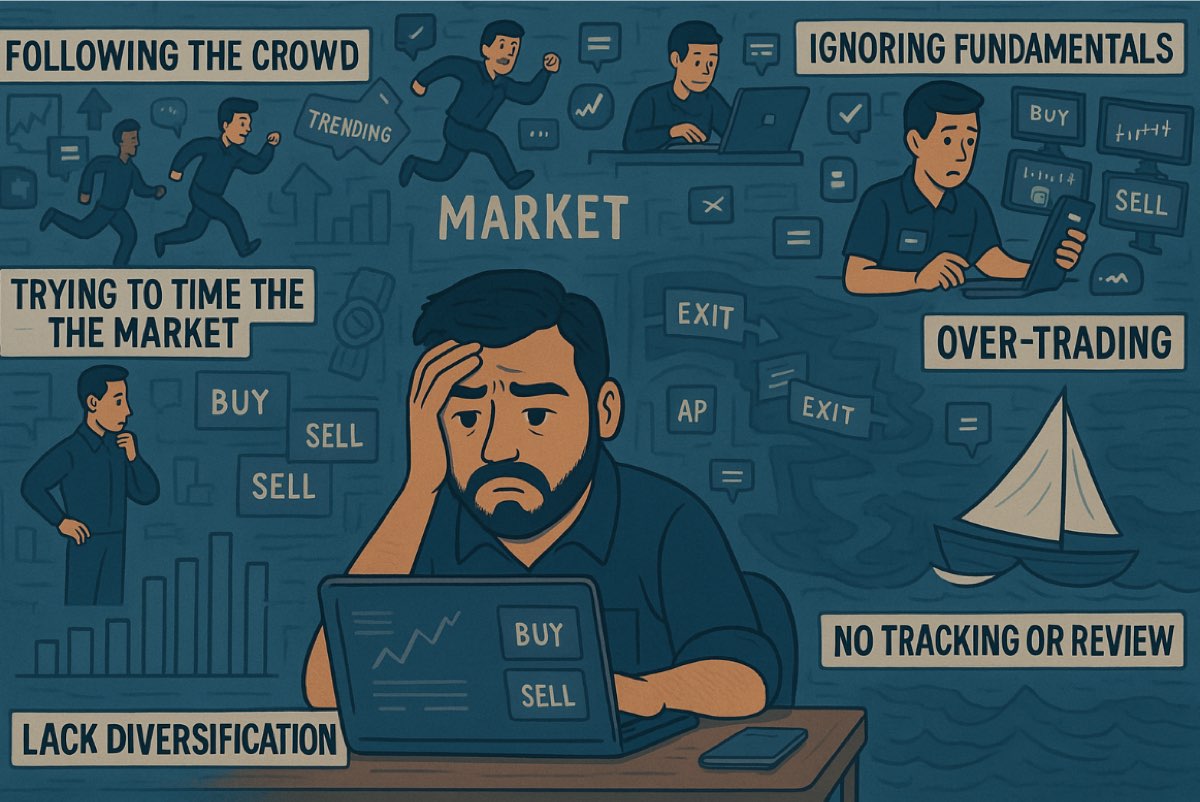
Ramesh, a 25-year-old IT professional from Pune, received his first performance bonus in 2020, he did what many young professionals do these days as he opened a trading account. He watched YouTube videos on “how to pick multibagger stocks,” joined Telegram groups with thousands of "expert investors," and dived boldly into the world of investing. Like many first-time retail investors, he jumped in with confidence but within a couple of years, his enthusiasm faded, and so did a large chunk of his portfolio. Ramesh story is not unique. Across India, millions of retail investors enter the stock market each year, yet only a fraction build long-term wealth. Why? The answer lies in a predictable pattern of avoidable mistakes. This article explores the most common mistakes that Ramesh (and perhaps many of us) make in the early stages of investing.
Most common mistakes in early stage of investing
1. Following the Crowd
One of Ramesh's first mistakes was following hype over homework. He bought stocks that were trending, those making waves on Twitter, WhatsApp groups, and popular finance YouTube channels. With no research or due diligence, he entered IPOs at peak valuations and bought “hot” stocks just because everyone else seemed to be. This is the classic herd mentality. The crowd is not always right, especially in the stock market. When everyone is optimistic, prices often overshoot value. When the mood turns, corrections can be swift and brutal. By the time the retail investor joins the party, the smart money may already be heading for the exit.
Thinking for yourself and conducting thorough research often outweigh the risks of blindly following market hype. A well-informed perspective and a willingness to challenge popular sentiment can lead to smarter decisions.
2. Trying to Time the Market
In March 2020, as the COVID-19 pandemic hit global markets, Ramesh panicked too. He sold all his holdings at a loss. A few months later, seeing the market rebound sharply, he jumped back in-this time buying at higher prices. His portfolio became a cycle of fear-driven exits and FOMO-driven entries. This emotional rollercoaster destroyed his returns and added unnecessary stress. Market timing is alluring because it promises precision and control. But in reality, even seasoned investors struggle with it. Getting both the entry and exit right consistently is nearly impossible without deep experience and analysis.
Instead of timing the market, aim for time in the market. A long-term horizon, combined with systematic investing, beats emotional decision-making every time.
3. Lack of Diversification
Ramesh prided himself on his “high conviction bets.” At one point, his entire portfolio consisted of just four stocks; two in fintech and two in new-age tech. When these sectors lost favor, his portfolio tanked. Concentration magnifies both gains and losses. While focus can pay off for experienced investors with insider knowledge or deep research capabilities, for most retail investors, it is a recipe for disaster.
Diversification across sectors, asset classes, and market caps helps spread risk. It is a buffer against the unpredictability of individual industries or companies.
4. Ignoring Fundamentals
Ramesh often chose stocks based on momentum, chatroom tips, or technical patterns. He never read annual reports, studied balance sheets, or tracked profit growth. One of his favorite stocks hadn't posted a profit in over three years and was burning cash quarter after quarter. This “price over value” mindset is dangerous. A stock is more than its ticker symbol and price chart, it represents ownership in a business. Ignoring financial health is like buying a used car without checking the engine or history.
Evaluate companies like you did evaluate a business partner. Understand their earnings, debt, management quality, and future prospects before investing.
5. No Exit Strategy
Ramesh did not have a clear answer to a critical question: When do I sell? He clung to losers hoping they did recover, and sold winners too early, afraid of losing unrealized gains. This inconsistency led to missed opportunities and amplified losses. Without an exit plan, emotional decisions take over. Fear and greed dominate. You may end up “marrying your stocks,” unable to let go even when logic says you should.
Before you buy a stock, know your exit criteria. Will you sell if the fundamentals change? If it reaches a certain price? If the sector outlook worsens? Clarity avoids chaos.
6. Overtrading and Lack of Patience
Ramesh checked his portfolio multiple times a day. He reacted to every news item, every market dip, every analyst tweet. This led to frequent buy/sell decisions, which added brokerage costs, short-term taxes, and most importantly mental fatigue. The market tends to reward discipline and patience over hyperactivity. Some of the strongest long-term outcomes come from doing nothing for long stretches while letting compounding work in silence.
Think like a business owner, not a day trader. Let your investments breathe and grow. Resist the urge to act constantly.
7. No Tracking or Review
While Ramesh knew how much his portfolio was worth, he never tracked how each investment was performing relative to benchmarks. He didn’t monitor sector-wise allocation or whether his investments were aligned with his original goals. Investing without regular review is like sailing without checking the compass. You may think you are on course, but drift is inevitable.
Set a monthly or quarterly review schedule. Use tools to track returns, rebalancing needs, and goal progress. A structured approach ensures you're not flying blind.
Conclusion
Retail investors like Ramesh don’t fail because they lack intelligence, they fail because they lack a system. Most mistakes come from a lack of guidance, structure, and discipline. Retail investing is a powerful tool but without the right habits, it becomes a risky gamble. If you have made some of these mistakes, you are not alone. Even seasoned investors stumble. The market does not punish beginners; it punishes those who stop learning. Investing well does not demand brilliance, it demands a system: discipline, rationality, and a long-term view. If you are just starting out or see shades of Ramesh in your own journey, consider this a reminder to build that system.