
Understanding Risk in Stock Market Investing
Introduction
Investing in the stock market offers great opportunities for wealth creation, but it also comes with risks. Many beginners are excited about potential gains but often overlook the risks involved. Understanding these risks is crucial to making informed decisions and protecting your investments. In this article, we will explore the different types of risks in the stock market and how you can manage them effectively.
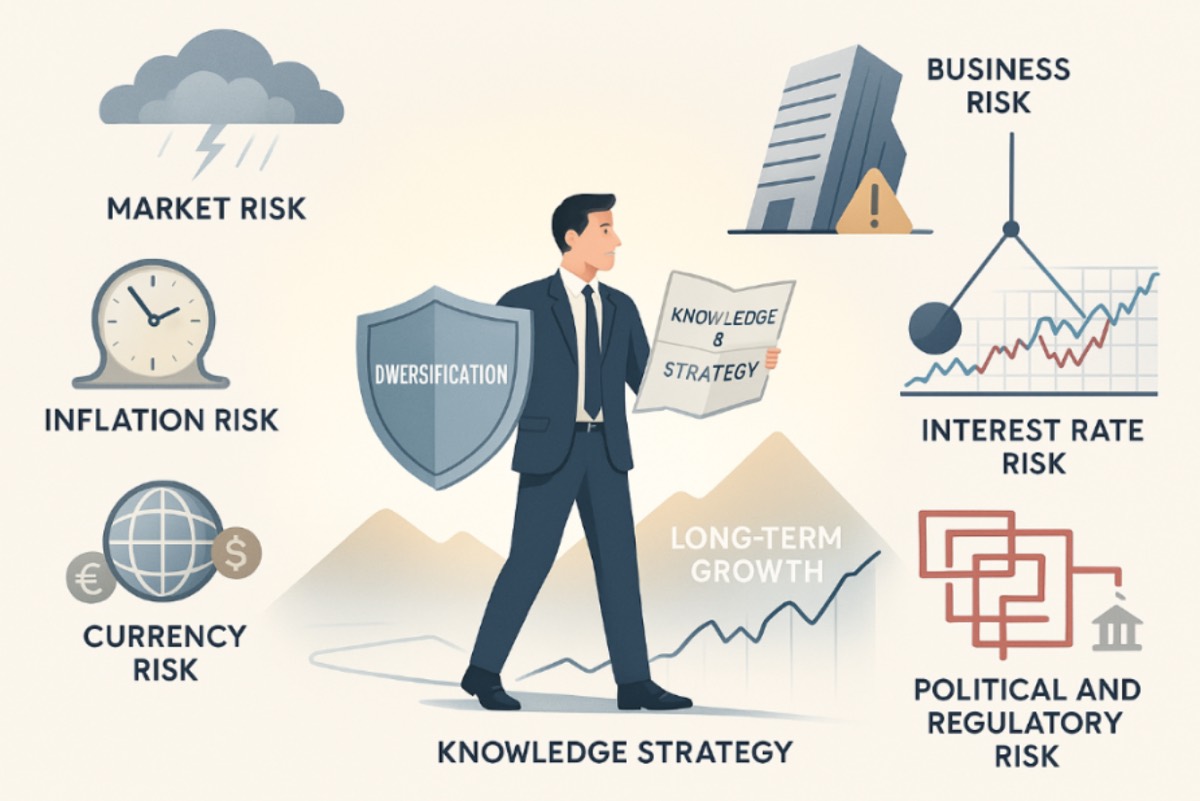
Types of Stock Market Risks
1. Market Risk (Systematic risk)
Market risk, also known as systematic risk, refers to the possibility of experiencing losses due to factors affecting the overall performance of financial markets. This type of risk cannot be eliminated through diversification because it impacts the entire market. Market risk stems from various sources including economic downturns, geopolitical events, and natural disasters. For example, the 2020 COVID-19 pandemic led to a major stock market crash in India, affecting Sensex and Nifty.
How to Manage It:
- Invest for the long term to ride out market fluctuations.
- Avoid panic selling during downturns.
2. Business Risk
Business risk refers to the potential for losses arising from company-specific challenges rather than broader market factors. When you invest in a stock, you acquire partial ownership of the company, and your returns rely on the company’s ability to remain operational and perform effectively. Factors such as poor management, declining sales, or unfavorable news can lead to a significant drop in the stock’s price.
How to Manage It:
- Research companies before investing.
- Track earnings reports and industry trends.
- Diversify across multiple companies to minimize exposure.
3. Inflation Risk
Inflation diminishes the purchasing power of money over time, causing the relative value of investment returns to decrease in the future. As prices rise, the value of money declines, which in turn reduces the real return on investments. Inflation impacts various stocks differently—while rising prices introduce uncertainty to markets, heightening volatility and risk, they also affect company profits and growth. Some stocks may perform differently in a high-inflation environment than others.
How to Manage It:
- Invest in assets that have historically outperformed inflation, such as stocks and real estate.
- Consider dividend-paying stocks that provide regular income.
4. Interest Rate Risk
Interest rate risk refers to the potential loss of money resulting from fluctuations in interest rates. While this risk is most directly associated with debt investments like bonds, it also has an indirect impact on stocks. When interest rates rise, borrowing costs increase, which can hinder business growth and negatively affect stock prices. The extent of interest rate risk varies across sectors—companies with high levels of debt or operating in capital-intensive industries are generally more vulnerable to interest rate changes compared to those with strong cash reserves and minimal debt.
How to Manage It:
- Balance your portfolio with secular stocks like consumer goods and healthcare.
- Avoid over-exposure to sectors highly dependent on borrowing, such as real estate and infrastructure.
5. Political and Regulatory Risk
Government policies, regulations, and political instability can have a major impact on stock prices. Changes in tax laws, trade policies, or foreign investment regulations can create uncertainty in the market.
How to Manage It:
- Stay updated on government policies and global political events.
- Invest in stable and well-regulated industries.
- Diversify internationally to reduce exposure to a single country’s regulatory environment.
6. Currency Risk (Exchange Rate Risk)
Currency risk (or exchange rate risk) is what happens when currency values change and affect your investment returns. When you invest in foreign stocks or companies that do business internationally, you're exposed to this risk. For example, if you buy European stocks and they rise 10%, but the euro falls 10% against your local currency, you'd break even when converting your money back. This risk affects not only direct foreign investments but also domestic companies that earn significant revenue overseas. While unavoidable in international investing, currency risk can be reduced through diversification and hedging strategies.
How to Manage It:
- Invest in hedged international funds to reduce currency exposure.
- Diversify your investments across different economies and currencies.
- Stay aware of global economic trends and currency exchange movements.
Conclusion
Stock market investing involves risks, but understanding and managing them can help investors navigate the market with more confidence. By diversifying your portfolio, staying informed, and making disciplined investment choices, you can approach the uncertainties of the market in a more structured way.
Understanding the range of stock market risks is a key part of investing responsibly. Recognising these risks and applying the mitigation approaches above can help investors avoid unforced errors and stay focused on their long-term goals.