
US Midterm Elections 2026: The Interval Match That Can Change the Whole Game

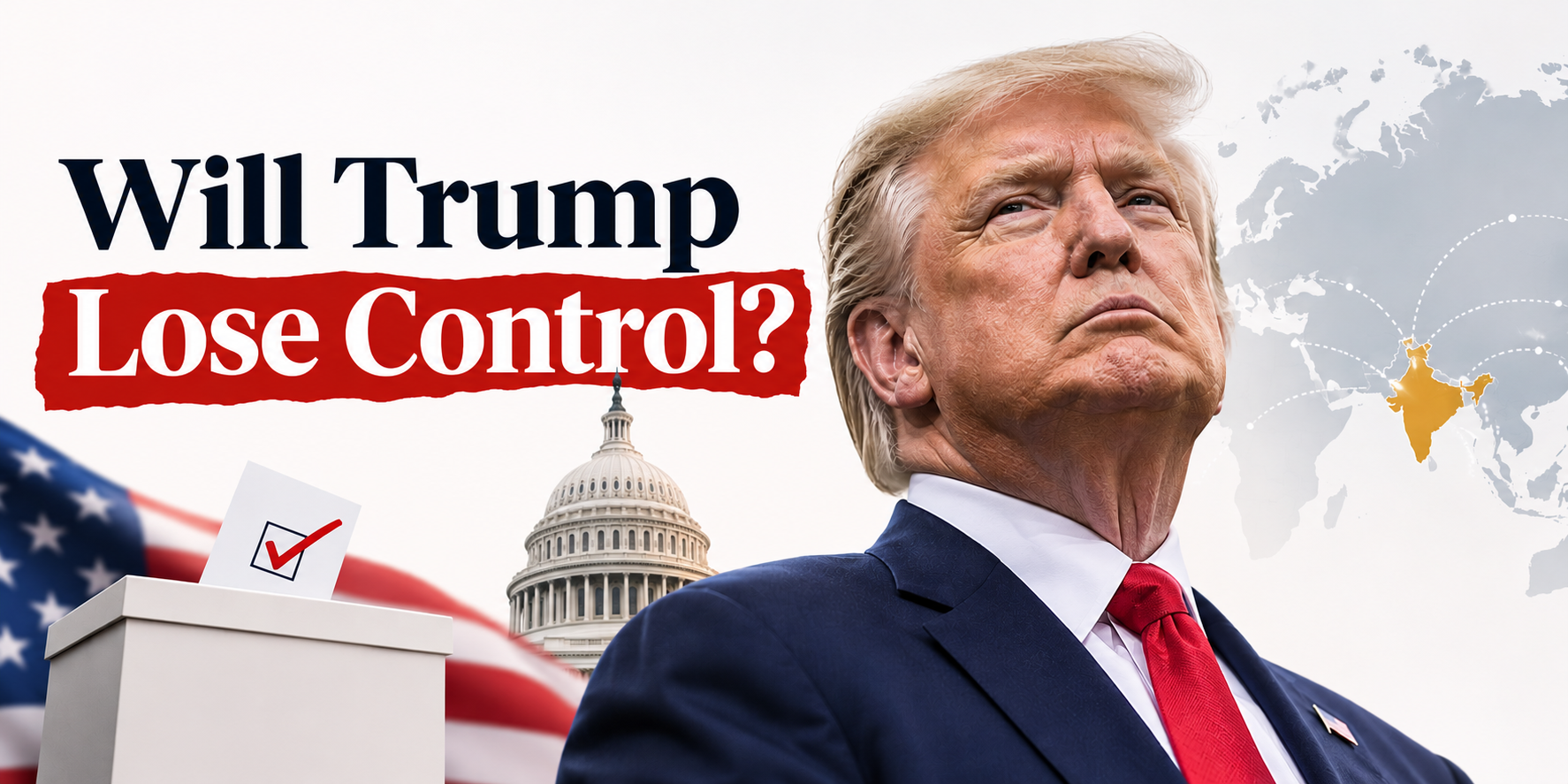
Why should you care about someone else's election?
On Tuesday, November 3, 2026, Americans will vote in an election that could quietly affect your SIP returns, the price of the rupee, and the job offer your cousin in Bengaluru is waiting for. Sounds dramatic? Stay with me.
America is the world's biggest economy and India's single biggest export customer. So when politics shifts in Washington, the ripples reach Dalal Street, our currency, and IT offices in Pune and Hyderabad. Think of it like heavy rain in Mumbai. It falls in one city, but the whole country's flights get delayed.
This blog explains the US midterm elections in plain language. No finance degree needed. Just one cup of chai and five minutes.
So what exactly is a midterm election?
America elects its President every four years. Midterms happen right in the middle, two years into the President's term. That is literally why they are called midterms.
Here is the cricket version. The President is the captain, picked for a four year series. But a captain cannot win alone. He needs his team, and in America that team is called Congress. Congress has two parts:
- The House of Representatives has 435 members, and every single seat is up for election every two years. Think of it as the playing XI that gets reselected after every series.
- The Senate has 100 members, two from each of the 50 states. Senators get six year terms, so only about one third of them face voters at a time. Think of them as senior players on long contracts.
Why does this matter so much? In America, the President cannot pass a law or spend government money on his own. Both the House and the Senate have to agree. A captain with a friendly dressing room gets things done. A captain whose dressing room is run by the rival camp spends the whole series stuck in meetings.
Voters also pick governors (think of them as chief ministers) in 36 states on the same day.
What's on the ballot this time?
Right now, President Trump's Republican party controls both houses. But the margin in the House is razor thin: 218 Republicans against 214 Democrats, with 2 seats empty. You need 218 for a majority, so Republicans are basically winning off the last ball. In the Senate, Republicans lead 53 to 47, so Democrats need a net gain of three or four seats to flip it.
This year, all 435 House seats and 35 Senate seats are being contested. Two of those Senate races are special elections for seats left empty when JD Vance became Vice President and Marco Rubio became Secretary of State.
What each side is selling. Republicans are pitching safer streets, more money in people's pockets, tighter borders, and their tax and energy policies, and they warn that a Democratic win would mean gridlock. Democrats are hammering on affordability and the cost of living, along with healthcare. The biggest issue for voters is simple: prices. US inflation rose to 3.7% in September, and a 30 year home loan now costs around 7.3% a year.
What the polls say. Polling averages show Democrats about nine points ahead on the generic ballot, and the Cook Political Report expects them to gain 5 to 15 House seats. The Senate looks much closer. But remember, polls are like pre match predictions on TV. In 2016, almost every expert picked one result and got the opposite. Nothing is final until the votes are counted.
History says: the sequel usually flops
There is a famous pattern in American politics called the midterm curse. The party that holds the White House almost always loses seats in the midterms.
The numbers are wild. The President's party has lost House seats in 18 of the 20 midterms held since World War II. Since 1934, it has lost an average of 28 House seats each time. Obama's Democrats got hammered in 2010 and 2014. In Trump's first term, Republicans lost 40 House seats in 2018, though they actually picked up two Senate seats. The rare exceptions were 1998 under Bill Clinton and 2002 under George W. Bush, right after the 9/11 attacks.
Why does this keep happening? Think of a Bollywood sequel. The first film is a blockbuster because everyone is excited. By the sequel, people start noticing the plot holes, and the angry reviewers shout louder than the happy fans. Voters work the same way. People unhappy with the government tend to turn up and vote, while satisfied people often stay home.
And the stock market? Here history is surprisingly kind. The S&P 500, America's version of the Nifty, has gone up in the 12 months after 32 of the last 38 midterms, gaining about 14% on average. The usual reason is that uncertainty ends and markets love clarity. But analysts warn this pattern is statistically weak, and the economy matters far more than who wins.
What changes inside America?
There are three ways this can play out. Here is each one, translated for desi readers.
| Result | What happens in Washington | Desi translation |
|---|---|---|
| Republicans keep both houses | The President's agenda continues smoothly, with room for more tax cuts and defence spending | A full majority government. Bills pass, but the government borrows more |
| Democrats win the House, Republicans keep the Senate | The House controls spending bills and can launch investigations; budget fights and shutdown risk go up | A coalition sarkar. Every bill needs a long negotiation |
| Democrats win both houses | Much stronger checks on spending, appointments and the President's actions | The opposition runs the dressing room |
If you have watched Captain America: Civil War, you get the idea of the middle two rows. Same team, two camps, and very little gets done while they fight. But here is the twist most people miss. Even if the President loses Congress, he keeps most of his power over trade and foreign policy. Tariffs are largely set by the White House. That is why Jefferies expects America's average tariff rate to stay between 10% and 20% even with a divided government. Congress can hold hearings and make noise, but it is unlikely to roll tariffs back by law.
And what does it mean for India?
This is the part that actually touches your wallet. There are four channels to watch.
1. The trade deal and tariffs. In February 2026, India and the US agreed on a framework that cut American tariffs on Indian goods to 18%. But eight months later, the full deal is still unsigned. Commerce Minister Piyush Goyal says the first part is finalised and in legal drafting, and India has deliberately slowed down to see how the vote goes. The US is India's largest export market, and Indian goods exports there rose to $42.79 billion in April to August. Textiles, jewellery, pharma and electronics have the most riding on it. Most analysts think the final call will still be taken in the White House, whoever wins Congress.
2. Your rupee and your SIP. This is the big one. US government bonds now pay very high interest, with the 10 year yield touching 5.34% in September, the highest since 2002. When America pays that much for safe money, foreign investors pull cash out of countries like India. It is like a rival IPL franchise offering your best player double the fee. According to Wright Research, foreign investors have sold a record ₹3.04 lakh crore of Indian shares in 2026, the Nifty is down about 14% this year, and the rupee has lost nearly 7% against the dollar. A divided Congress tends to slow new US borrowing, which could ease that pressure. A Republican sweep could mean more borrowing and interest rates staying high for longer.
3. Jobs and visas. The $100,000 fee on new H1B visas is a sore point for Indian techies, yet neither party is making it a campaign issue. Some analysts think a Democratic House could ease treatment of Indian students and workers, but there is no guarantee.
4. Oil. A US law allows tariffs of up to 100% on big buyers of Russian oil, and India is one of them. In mid October, Trump signed an order waiving those tariffs, which gave India relief. That law had support from both parties, so the midterm result is unlikely to change it on its own.
The simple takeaway: for India, this election matters most through the dollar and American interest rates, not through some overnight change in policy.
The interval, not the climax
Think of the midterms as the interval in a three hour Bollywood film. The hero is not changing, because Trump stays President until January 2029. But the second half of the story can twist completely depending on who controls the dressing room.
Results will start coming in on Wednesday morning, November 4, Indian time. If you want to keep score, watch who wins the House, whether Republicans hold the Senate, how the Nifty and the rupee react, and whether the India US trade deal finally gets signed in the weeks after.
Now I want to hear from you. Do you think a divided America is good or bad for India? Drop your answer in the comments.